At Least 40 Dead In Sudan’s Worst Cholera Outbreak In Years
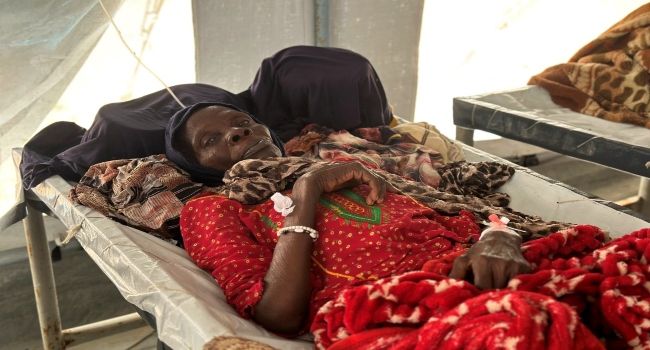
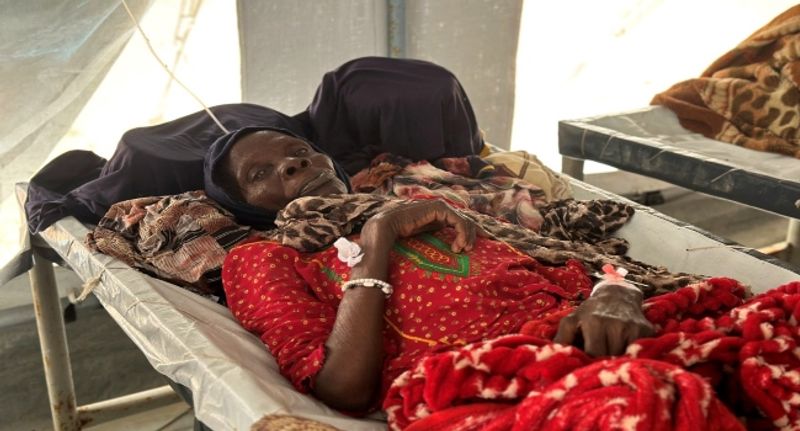
According to the World Health Organisation, between January of 2023 and July of this year, Sudan had the highest number of cholera deaths of any country in the world.Cholera has claimed at least 40 lives in Sudan’s Darfur region over the last week as the country weathers its worst outbreak in years, Doctors Without Borders (MSF) said on Thursday.At a cholera isolation tent at a Sudanese displacement camp, an AFP journalist saw women and a young girl receiving intravenous fluids, while exhausted and weak patients sprawled on camp beds. Citing rising cases of cholera, which “exacerbate the worst effects of malnutrition,” the European Union (EU) called on all parties to “urgently” allow in international aid.Medical charity MSF said the vast western region, which has been a major battleground over more than two years of fighting between the regular army and the paramilitary Rapid Support Forces (RSF), had been hardest hit by the year-old outbreak.“On top of an all-out war, people in Sudan are now experiencing the worst cholera outbreak the country has seen in years.
“In the Darfur region alone, MSF teams treated over 2,300 patients and recorded 40 deaths in the past week,” MSF said in a statement.The NGO said 2,470 cholera-related deaths had been reported in the year to August 11, out of 99,700 suspected cases.Cholera is an acute intestinal infection that spreads through food and water contaminated with bacteria, often from faeces.It causes severe diarrhoea, vomiting, and muscle cramps.Cholera can kill within hours when not attended to, though it can be treated with simple oral rehydration and antibiotics for more severe cases.There has been a global increase in cholera cases, which have also spread geographically, since 2021.
MSF said mass displacements of civilians sparked by the war in Sudan had aggravated the outbreak by denying people access to clean water for essential hygiene measures, such as washing dishes and food.The delivery of humanitarian aid has become almost impossible.“
This cannot continue. Civilians must be protected, and humanitarian access must be granted,” the EU said, in a joint statement with several countries, including Britain, Canada, and Japan.No Other Choice“The situation is most extreme in Tawila, North Darfur state, where 380,000 people have fled to escape ongoing fighting around the city of El-Fasher, according to the United Nations,” MSF said.“
In Tawila, people survive with an average of just three litres of water per day, which is less than half the emergency minimum threshold of 7.5 litres needed per person per day for drinking, cooking, and hygiene,” it said.At a cholera isolation centre in a tent at a Tawila displacement camp, an AFP journalist met patients suffering in the latest outbreak.“We mix lemon in the water when we have it and drink it as medicine,” said Mona Ibrahim, who has been living for two months in a hastily erected camp in Tawila.
“We have no other choice. We don’t have toilets the children relieve themselves in the open,” she added.According to the World Health Organisation, between January of 2023 and July of this year, Sudan had the highest number of cholera deaths of any country in the world.Sudan’s mortality rate from cholera, at 2.1 percent, is more than 2.5 times higher than the global average.Contaminated Water Since forces loyal to the regular army recaptured the capital Khartoum in March, fighting has again focused on Darfur, where the paramilitaries have been attempting to take El-Fasher.The besieged pocket is the last major city in the western region still under the army’s control, and UN agencies have spoken of appalling conditions for the remaining civilians trapped inside.
“In displacement and refugee camps, families often have no choice but to drink from contaminated sources and many contract cholera,” said Sylvain Penicaud, MSF project coordinator in Tawila.
“Just two weeks ago, a body was found in a well inside one of the camps. It was removed, but within two days, people were forced to drink from that same water again,” Penicaud added.MSF said that heavy rains were worsening the crisis by contaminating water and damaging sewage systems, while the exodus of civilians seeking refuge was spreading the disease.“As people move around to flee fighting, cholera is spreading further, in Sudan and into neighbouring Chad and South Sudan,” it said.
MSF’s head of mission in Sudan, Tuna Turkmen, said the situation was “beyond urgent”.
“The outbreak is spreading well beyond displacement camps now, into multiple localities across Darfur states and beyond. Survivors of war must not be left to die from a preventable disease,” he said.