
Back to Homepage
Technology

Blue Origin Set For Space Launch After Repeated Delays

Aglow News
November 15, 2025
Blue Origin Set For Space Launch After Repeated Delays

Blue Origin Set For Space Launch After Repeated Delays

The planned launch has been repeatedly delayed over the past week: on Sunday over weather on Earth, and on Wednesday due to weather in space.

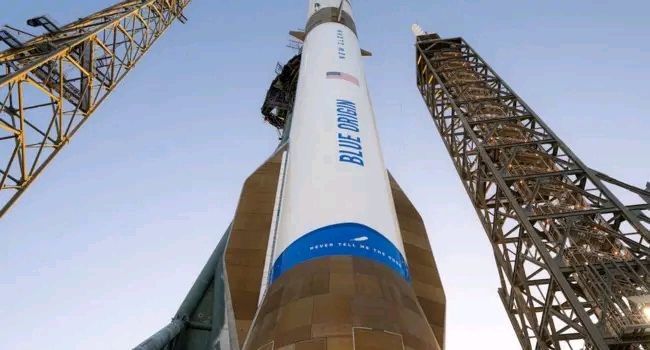
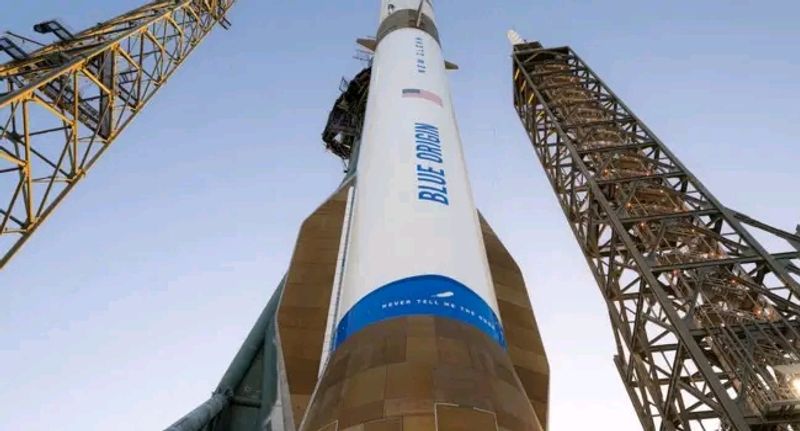
Jeff Bezos’s Blue Origin will try once again on Thursday to launch its New Glenn Rocket.

The planned launch has been repeatedly delayed over the past week: on Sunday over weather on Earth, and on Wednesday due to weather in space.

When it eventually blasts off, the 322-foot (98-meter) New Glenn rocket will have the task of sending the US space agency NASA’s ESCAPADE twin spacecraft to Mars, in a bid to study the Red Planet’s climate history with the eventual hope of human exploration.

Thursday’s launch window opens at 2:57 pm (1957 GMT) and lasts 88 minutes.

The second postponement was over “highly elevated solar activity” that NASA was worried could impact its spacecraft.
Article image

The sun has recently been spewing charged particles that are interacting with Earth’s magnetic field, but the Space Weather Prediction Center said the geomagnetic storm was fading.

Closer to home, these space events have resulted in brilliant northern lights displays across the night sky in North America.

The New Glenn launch is due to proceed amid intensifying competition between Blue Origin and Elon Musk’s SpaceX.

The rival companies of billionaires Musk and Bezos are locked in a commercial space race that recently escalated, as NASA opened up bids for its planned Moon mission.

Blue Origin’s launch is to serve as a key test of whether it can achieve booster recovery, which would prove a technical breakthrough for the company if successful.

New Glenn’s inaugural flight in January was marked as a success, as its payload achieved orbit and successfully performed tests.

Article image

But its first-stage booster, which was meant to be reusable, did not stick to its landing on a platform in the Atlantic, and instead was lost during descent.

In its second effort, Blue Origin will try once more to recover the booster stage. Thus far, only Musk’s company SpaceX has managed that feat.


Tags

Technology

Related Posts

EU Reaches Accord On New Generation Of Genetically Modified Crops

EU Reaches Accord On New Generation Of Genetically Modified Crops

The European Union has reached a provisional agreement on a new legal framework for plants developed through New Genomic Techniques (NGTs), a modern form of genetic editing that alters small parts of a plant’s DNA without introducing genes from other organisms. EU officials say the move is aimed at boosting agricultural competitiveness, improving food security, and reducing dependence on external imports. Supporters argue that NGTs can help produce climate-resistant crops with higher yields while reducing the need for fertilizers and pesticides. However, while some NGT plants will face relaxed regulations, herbicide-resistant and insecticide-producing varieties remain banned, and NGTs will not be allowed in organic farming. Environmental groups continue to raise concerns over traceability, labelling, and potential ecological risks.

Women Don Fake Mustaches In LinkedIn ‘Gender Bias’ Fight

Women Don Fake Mustaches In LinkedIn ‘Gender Bias’ Fight

A growing number of women on LinkedIn are disguising themselves as men—changing their names, pronouns, and even posting photos with fake mustaches—to test alleged gender bias on the platform. Many reported dramatic spikes in reach and engagement after switching to male identities, prompting renewed calls for greater transparency in how LinkedIn’s algorithm promotes content. While LinkedIn denies using gender as a ranking factor, users say the experiment highlights long-standing concerns about hidden gender disparities in professional visibility.

Humanoid Robots To Trial Guiding Crowds At Chinese Border Crossings

Humanoid Robots To Trial Guiding Crowds At Chinese Border Crossings

Humanoid robots may soon be guiding travellers and managing crowds at Chinese border crossings after Shenzhen-based UBTech Robotics secured a $37-million contract for a major trial project near China’s border with Vietnam. The initiative will deploy UBTech’s latest “Walker” humanoids to test real-world applications including border management support, logistics handling, and factory patrols. Deliveries of the self-charging robots are expected to begin in December, though it remains unclear whether they will operate autonomously with AI or be remotely controlled. China continues to push aggressively into humanoid robotics, with industry forecasts predicting domestic sales could hit 82 billion yuan ($11.6 billion) by 2025. Despite concerns about overcapacity in the sector, UBTech says demand for its Walker series—now generating 1.1 billion yuan in sales this year—continues to surpass expectations.

Share this article