
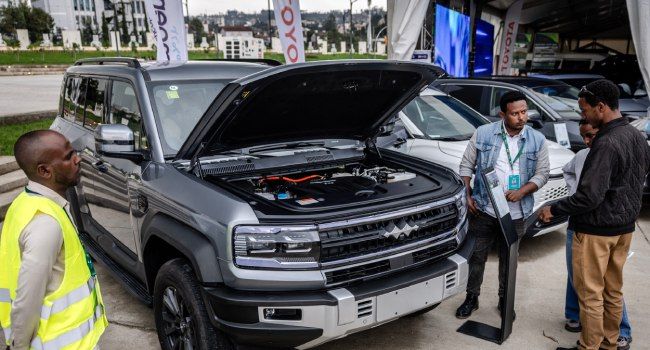
Ethiopians Dream Of An Electric Car Future
While electric vehicle (EV) sales in Africa accounted for only one percent of the global market in 2024, according to the International Energy Agency, Ethiopia wants to change that. Kemeriya Mehammed Abduraheman set her sights on an electric car four months ago, joining more than 100,000 Ethiopians who have made the green switch.
While electric vehicle (EV) sales in Africa accounted for only one percent of the global market in 2024, according to the International Energy Agency, Ethiopia wants to change that.In a world first, the government last year banned the import of petrol and diesel vehicles, partly for green reasons but also to help wean the country off increasingly expensive fuel. Many welcomed the shift.“I was tired of waiting in line to fill up,” Abduraheman, a 36-year-old development consultant, told AFP in the capital Addis Ababa, where petrol queues can stretch for hundreds of metres (yards) and eat up half of a day.Bareo Hassen Bareo, who heads green mobility at the Department of Transport, said there were already 115,000 EVs—seven percent of vehicles—on the road.“
In 10 years, we will have more than 500,000,” he told AFP.– Saving Time And Money –But the vehicles remain hugely expensive, especially in a country where nearly 40 percent of the population lives on less than $3 a day, according to the World Bank.Abduraheman paid around $34,000 to buy a model from Chinese brand BYD, describing it as a “long-term” decision.“I’ve been able to save on costs, and I’ve been able to save on time in terms of not lining up for gas,” she said.The landlocked country depends on the ports of neighbouring Djibouti and often faces fuel shortages.
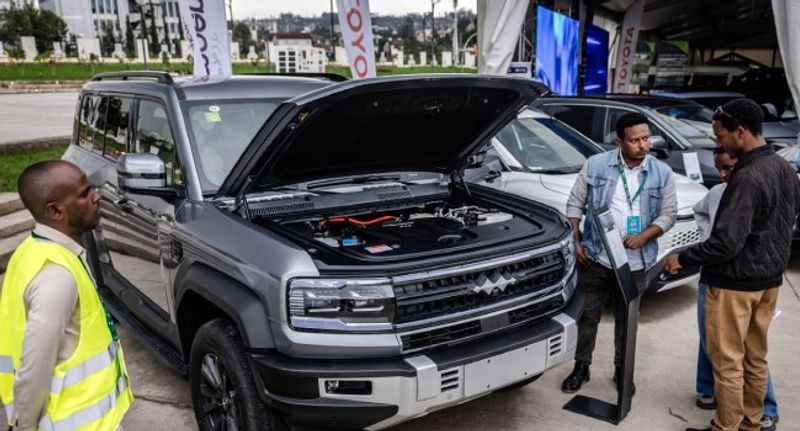
Abduraheman used to spend about 4,000 birr ($27) each month on fuel but now spends the equivalent of $4 on charging. EVs are increasingly visible in the capital, mostly Chinese brands.Residents have even glimpsed an outlandish Tesla Cybertruck, which retails for over $100,000, crawling through Addis Ababa’s streets.The city’s buses are also now electric.Economic analyst Samson Berhane said the EV transition had been “more successful than initially anticipated.”“This can be attributed to the country’s rapidly growing middle class and the surging demand for new vehicles,” he told AFP.
While charging stations have mushroomed across the capital, he said, “Many consumers have taken the initiative to install chargers at home and at work.”– Mega-Dam Hope –The rapid transition has not come without challenges. There are reports of shortages of EV parts and qualified mechanics.And there are only around 100 charging stations in the whole country, meaning drivers cannot plan long journeys outside the capital.“We need more than 2,300,” admitted Bareo at the transport department. High prices for EVs are also a pressing issue, which the government hopes to counter by tempting foreign manufacturers to produce locally. The unreliable electricity supply is also a worry, though the government hopes the inauguration of a massive mega-dam this week expected to double the country’s electrical capacity will facilitate the green transition.
It cannot come soon enough: near Addis Ababa International Airport, dozens of EV drivers wait to use chargers operated by the national operator Ethio Telecom.“It has been four days since the power went out in my area, so I am charging it here,” said one customer, Semagn Getnet.
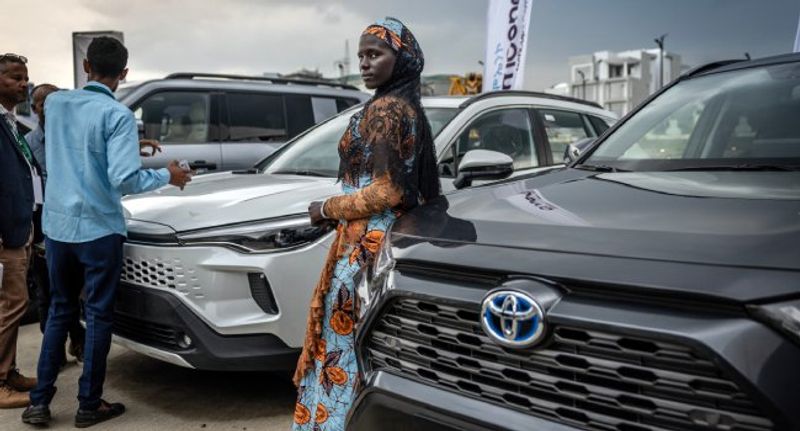
“Electric cars are good and pleasing, but there are some problems,” he added