EU Queries Apple, Google, Microsoft Over Alleged Financial Scams
The European Commission sent a request for information under the Digital Services Act (DSA) to the companies, also including Microsoft and Booking, "on how they make sure that their services are not being misused by scammers", an EU spokesman said.
The European Union on Tuesday demanded Big Tech players, including Apple and Google, explain what action they are taking against financial scams online, as Brussels seeks to show it is not shying away from enforcing its rules. The European Commission sent a request for information under the Digital Services Act (DSA) to the companies, also including Microsoft and Booking, “on how they make sure that their services are not being misused by scammers”, an EU spokesman said.The DSA is the EU’s landmark law demanding Big Tech firms do more to tackle illegal content, but it has faced retaliation threats from US President Donald Trump and censorship claims from the US tech sector.
The EU has vowed it will not back down from enforcing its rules to protect Europeans online.Tuesday’s request could lead to a probe under the DSA and even fines, but does not itself suggest the law has been broken, nor is it a move towards punishment.“This is an essential step also to protect users across the EU from certain of these practices, and to make sure that platforms in the EU also play their role,” EU digital affairs spokesman Thomas Regnier told reporters in Brussels.The request relates to Apple’s App Store, Google Play, online travel agent Booking and Microsoft’s Bing search engine.
The EU fears app stores could be used by scammers to create fake apps posing as legitimate banking services, or fraudsters could publish links to fake websites on search engines.A Microsoft spokesperson said the company was “committed to creating safe experiences online and will continue to engage with the European Commission”.Google said it blocked hundreds of millions of “scammy results in search every day”, while Booking said it would “engage constructively” with Brussels.“Between 2023 and 2024, we have seen a drop from 1.5 million phishing-related fake reservations detected and blocked down to 250,000,” Booking added.
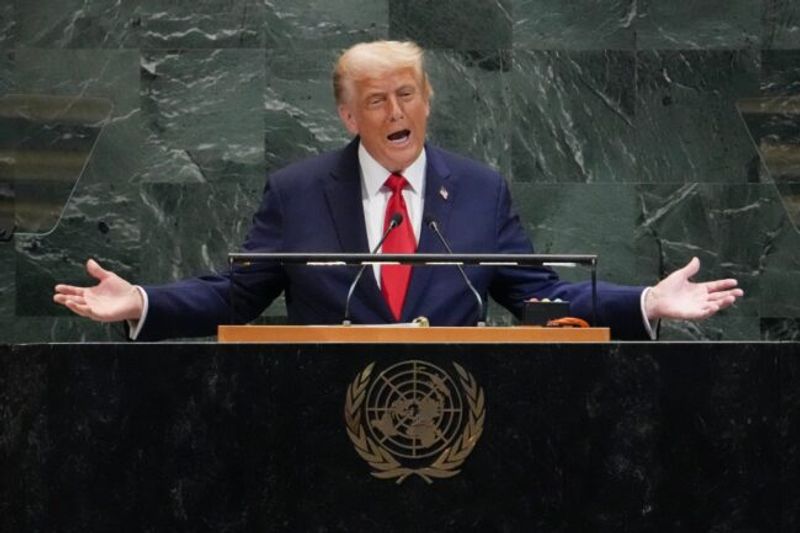
Trump ThreatsUS President Donald Trump delivers remarks to the United Nations General Assembly at the UN headquarters in New York City on September 23, 2025. (Photo by TIMOTHY A. CLARY / AFP)The EU has a bolstered legal armoury with the DSA and its sister law, the Digital Markets Act, which seeks to ensure fair competition online.Brussels has already launched multiple investigations under the DSA into Meta’s Facebook and Instagram, as well as TikTok and X.But its rules have faced the wrath of Trump — who has shaken up global trade by hitting America’s trading partners with higher tariffs and threatening more levies on those he accuses of targeting US tech companies.The US State Department, Trump allies and critics, including Meta chief Mark Zuckerberg and X owner Elon Musk, have called European rules censorship.
The EU rejects such claims, stressing that whatever is illegal in the real world is also illegal in the online realm.It has also pushed back at accusations that it is targeting American titans, pointing to investigations into major Chinese players that face DSA scrutiny, including shopping platform AliExpress.Defenders of the bloc’s tech rules have meanwhile attacked the EU for failing to complete its probe into Musk’s X, which opened in December 2023. X is expected to be hit with a fine, but Brussels says technical work in the investigation continues.EU digital chief Henna Virkkunen told AFP last week that probes into online platforms, including X, will be completed in the “coming weeks and months”.
She warned that more investigations could also be on the way.