Floods Hit Sri Lanka’s Capital As Cyclone Deaths Near 200
The cyclone is Sri Lanka's deadliest natural disaster since 2017, when flooding and landslides claimed more than 200 lives and displaced hundreds of thousands.
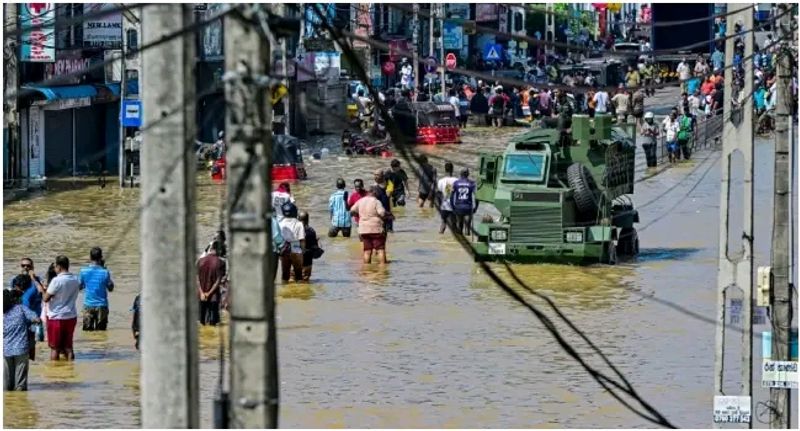
Entire areas of Sri Lanka’s capital were flooded on Sunday after a powerful cyclone triggered heavy rains and mudslides across the island, with authorities reporting nearly 200 dead and dozens more missing.
Officials said the extent of the damage in the country’s worst-affected central region was only just being revealed as relief workers cleared roads blocked by fallen trees and mudslides.
The Disaster Management Centre (DMC) said at least 193 people had died following a week of heavy rains brought on by Cyclone Ditwah, while 228 people were missing.
The northern parts of Colombo were flooded as the water level in the Kelani River rose rapidly, the DMC said.
“Although the cyclone has left us, heavy rains upstream are now flooding low-lying areas along the banks of the Kelani River,” a DMC official said.
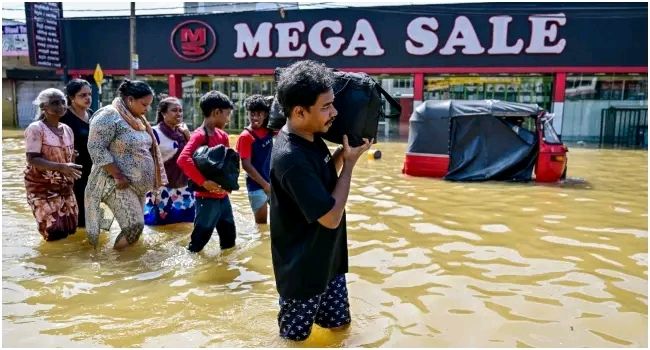
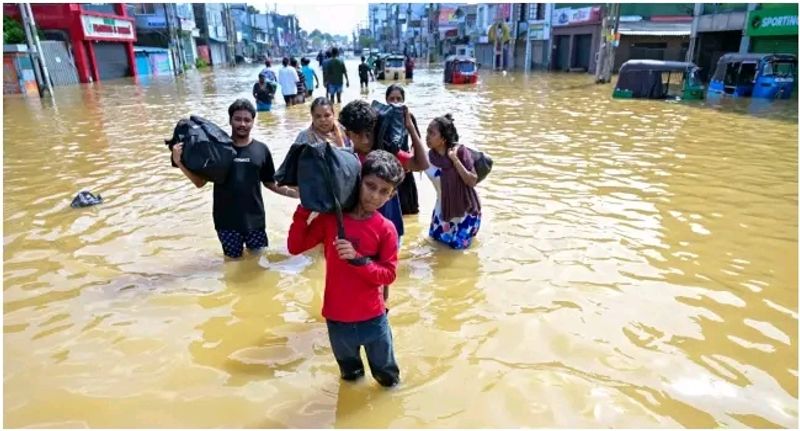
People with their belongings wade through a flooded street after heavy rainfall in Wellampitiya on the outskirts of Colombo on November 30, 2025.
Cyclone Ditwah moved away towards India on Saturday.
Selvi, 46, a resident of the Colombo suburb of Wennawatte, left her flooded home on Sunday, carrying four bags of clothes and valuables.
“My house is completely flooded. I don’t know where to go, but I hope there is some safe shelter where I can take my family,” she told AFP.
Water levels in the town of Manampitiya, 250 kilometres (156 miles) north-east of Colombo, were receding, revealing massive destruction.
“Manampitiya is a flood-prone town, but I have never seen such a volume of water,” said 72-year-old resident S. Sivanandan.
He told the local News Centre portal that businesses and property had been damaged extensively. A car had flipped upside down right in front of his shop.
– Deadliest in years –
People with their belongings wade through a flooded street after heavy rainfall in Wellampitiya on the outskirts of Colombo on November 30, 2025.
Although there have been relatively few injuries, the National Blood Transfusion Service said it was in short supply.
The blood bank chief, Lakshman Edirisinghe, said their daily requirement was about 1,500 units of blood, but the weather-related disruptions had reduced supply to just 236 units on Saturday.
“Because of floods and heavy rains, we were unable to conduct our mobile campaigns to collect blood,” he told reporters in Colombo. “We appeal to donors to visit the nearest blood bank.”
The National Building Research Organisation, which monitors the stability of hillsides, said there was a high risk of further landslides because mountain slopes were still saturated with rainwater.
President Anura Kumara Dissanayake declared a state of emergency on Saturday to deal with the aftermath of the cyclone and appealed for international aid.
India was the first to respond, sending relief supplies and two helicopters with crew to carry out rescue missions. Two more choppers were due to join on Sunday, officials said.
Pakistan was also sending rescue teams, according to the Sri Lankan Air Force. Japan said it would send a team to assess immediate needs and pledged further assistance.
The extreme weather system has destroyed more than 25,000 homes and sent 147,000 people into state-run temporary shelters.
Another 968,000 people required assistance after being displaced by the floods.
Troops from the army, navy, and air force have been deployed alongside civilian workers and volunteers to assist with the relief effort.
The cyclone is Sri Lanka’s deadliest natural disaster since 2017, when flooding and landslides claimed more than 200 lives and displaced hundreds of thousands.
The worst flooding since the turn of the century occurred in June 2003, when 254 people were killed.