Lagos Begins Demolition Of Illegal Buildings At Trade Fair Complex
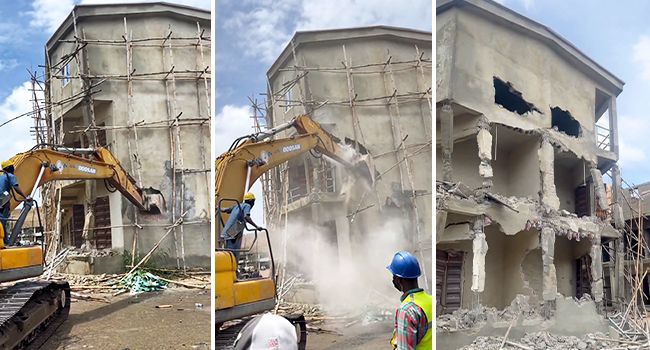
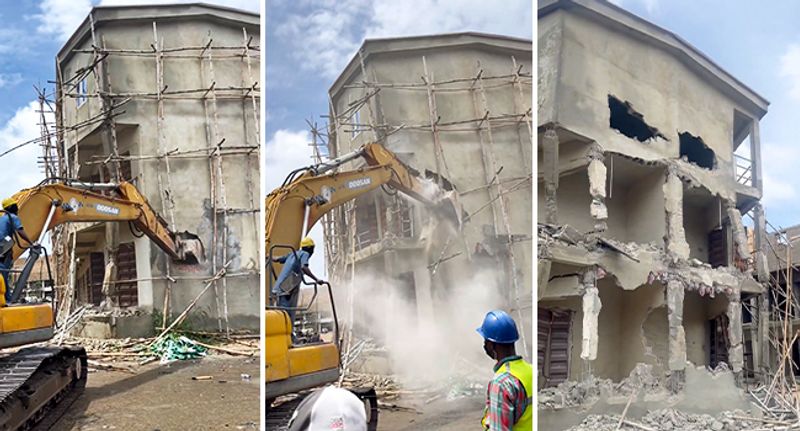
According to the state government, the move was in a bid to restore order and enforce physical planning laws.The Lagos State Government on Thursday began demolition of unsafe and illegal buildings at the Trade Fair Complex in Ojo.The operation was carried out jointly by the Ministry of Physical Planning, Lagos State Building Control Agency, Lagos State Urban Renewal Agency, and the Lagos State Physical Planning Permit Authority.
Senior Special Assistant on New Media to Governor Babajide Sanwo-Olu, Jubril Gawat, confirmed the exercise in a post on X. According to him, the move was to restore order and enforce physical planning laws. He said the operation was targeted at “illegal developments, structures without statutory approvals, defective structures, and buildings erected on road setbacks and drainages.”
“The Lagos State Government has begun removal of illegal developments, structures without statutory approvals and defective structures, and structures built on road setback and drainages in the Trade Fair Complex, Ojo Local Government area,” Gawat said. Also present were the Office of Infrastructure, members of the Lagos State House of Assembly, and security agencies who provided backup during the exercise.
Meanwhile, Lagos State Government, last week, ordered the immediate suspension of all reclamation projects across the state, citing environmental risks.Commissioner for Environment and Water Resources, Tokunbo Wahab, who made the announcement, said the ministry observed with concern the proliferation of reclamation activities on wetlands, floodplains, and lagoons statewide.
He noted that affected areas included “Parkview, Banana Island, Osborne, Ikoyi, Victoria Island Extension, Lekki, Ajah, Oworonshoki, and parts of Ikorodu”. The commissioner warned that many projects lacked proper Environmental Impact Assessment approvals and drainage clearance from the ministry.
He explained that reclamation, though beneficial for housing and infrastructure, carried risks of flooding, erosion, and ecosystem disruption. “Lagos’s low-lying topography and fragile ecosystem cannot withstand indiscriminate reclamation activities without grave consequences,” said Wahab.