Lending rates may fall as inflation eases – CBN
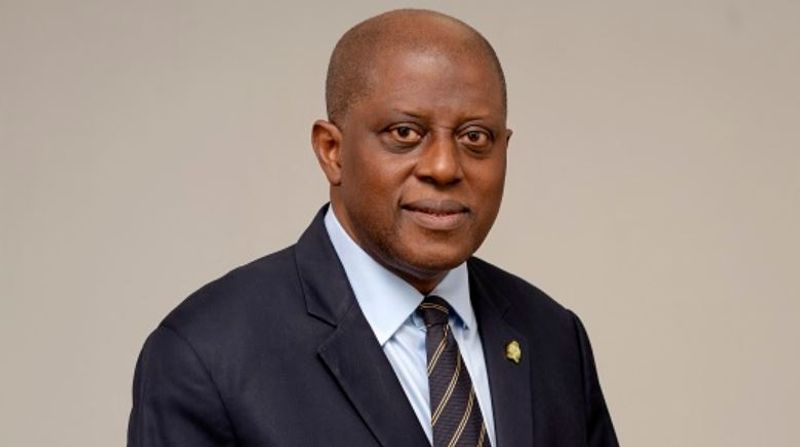
The Governor of the Central Bank of Nigeria, Mr Olayemi Cardoso, has hinted that lending rates may decline in the coming months as inflation continues to ease, raising hopes for improved access to credit and stronger investment flows.Cardoso gave the assurance during a fireside chat at the European Business Chamber (Eurocham Nigeria) C-Level Forum in Lagos on Saturday.A statement by the CBN on Sunday reaffirmed the bank’s commitment to macroeconomic stability, a stronger banking sector, and positioning Nigeria as a top investment destination.According to the CBN governor, headline inflation, though still high, has begun to slow down, creating the possibility of lower lending rates once price stability is further consolidated.
“He stated that there is a substantial potential for interest rates to decrease in the future as inflation continues to decline and as markets become more efficient in allocating capital,” the statement read.He was also quoted in the statement as saying, “That is the environment in which stronger corporate lending and higher levels of investment will naturally follow.”Cardoso acknowledged that high lending rates have weighed on businesses but explained that the CBN’s priority has been to restore confidence and strengthen the system’s resilience.“We will protect the stability that has been re-established in the financial system with the utmost zeal,” the statement quoted him as saying.
“Our primary objective is to maintain that stability while simultaneously addressing inflation and ensuring that the financial system is sufficiently resilient to facilitate corporate lending and investment.”The Governor highlighted the progress of the ongoing bank recapitalisation exercise, which he described as critical for safeguarding the financial system.He explained that the new minimum capital requirements would produce stronger institutions capable of withstanding shocks and financing broader economic growth.He further stressed that technology-driven solutions and the deepening of financial inclusion were key priorities for the Bank.According to him, expanding access to fintech platforms and supporting innovation will play a central role in tackling poverty and bridging financing gaps.Cardoso also pointed to improved coordination with the fiscal authorities as a positive shift in Nigeria’s policy environment, noting that collaboration with the Ministry of Finance, the Ministry of Trade and Industry, and the Budget Office “will enable the country to sustain reforms and achieve long-term stability.”Speaking on Nigeria’s position in the global economy, the CBN Governor remarked that the country’s size and strategic location gave it a unique role to play in West Africa and beyond.“
The urgency of addressing our own affairs is underscored by the ongoing geopolitical changes,” he observed.The statement added, “Nigeria is a market that is both large and appealing in its own right, and it is also situated at the entrance to the broader continent and West Africa. This underscores the importance of maintaining stability at home.”Earlier, Eurocham President Yann Gilbert praised the forum as an important platform for dialogue between European businesses and Nigerian policymakers.He noted that members of the chamber were committed to long-term partnerships in Nigeria, with a focus on job creation and sustainable investment.
The CBN raised its benchmark lending rate six times in 2024, pushing the Monetary Policy Rate from 18.75 per cent at the start of the year to 27.50 per cent by December.The aggressive tightening cycle was aimed at stemming runaway inflation and stabilising the naira, which had been under sustained pressure.Records show that the series of hikes, delivered across all six MPC meetings in 2024, represented the steepest monetary tightening in recent history.Each decision was followed by statements emphasising the Bank’s resolve to restore price stability and anchor investor confidence in the domestic economy.The final increase, announced at the November meeting, brought the MPR to 27.50 per cent, its highest level on record.
However, 2025 has so far marked a pause in the tightening cycle. The CBN has held the rate unchanged at 27.50 per cent in each of its meetings this year, including those in February, May, and July.Newsmen earlier reported that businesses across Nigeria have ranked high interest rates as the most severe constraint affecting their operations in June 2025, overtaking long-standing challenges such as insecurity and poor electricity supply.The CBN disclosed this in its June 2025 Business Expectations Survey, which polled 1,900 firms across the agriculture, services, and industrial sectors.According to the report, high interest rates scored 75.6 on the constraint index, followed by insecurity at 75.2 and insufficient power supply at 74.3.The Director-General of the Lagos Chamber of Commerce and Industry, Dr Chinyere Almona, earlier warned that retaining the MPR at 27.5 per cent translates to a significant burden on businesses.
“We must restate that the interest rate at 27.5 per cent remains a depressing burden on businesses. We therefore desire to see a reduction in the Monetary Policy Rate,” Almona said.The next Monetary Policy Committee meeting is scheduled to be held on September 22 and 23, 2025, according to the Bank’s published calendar.
Market watchers are looking to that meeting for signals on whether the regulator will maintain its pause or begin to ease policy as inflation continues to ease.