Back to Homepage
Business

Nigeria’s Money Supply Drops To ₦118trn The drop, driven by a five per cent

Aglow News
October 30, 2025
Nigeria’s Money Supply Drops To ₦118trn  The drop, driven by a five per cent

Nigeria’s Money Supply Drops To ₦118trn

The drop, driven by a five per cent decline in banks’ credit to the economy, was from ₦119.7 trillion in August 2025.
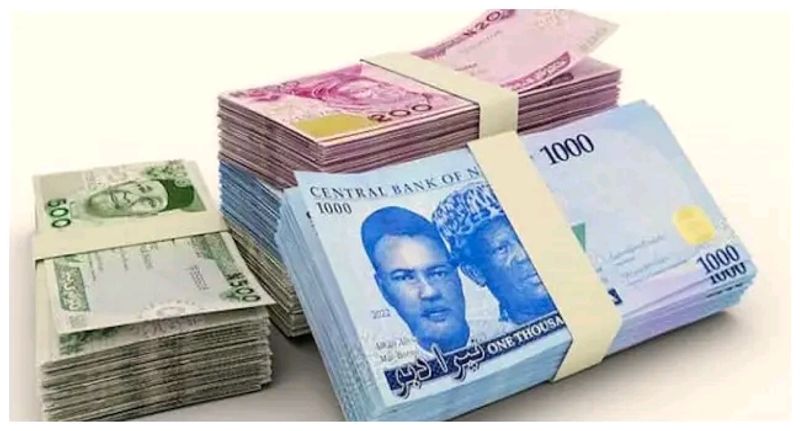
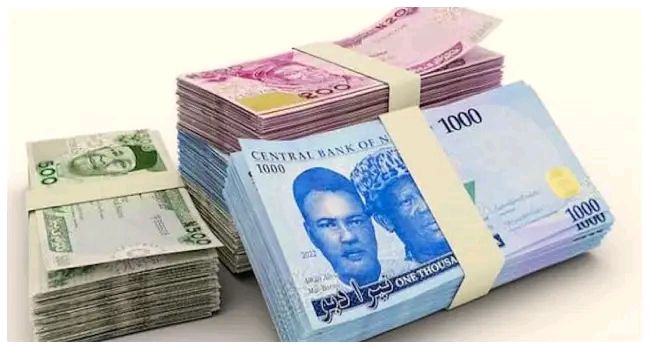
Nigeria’s Money Supply (M²) dropped month-on-month (MoM) to about ₦118 trillion in September 2025.

The Central Bank of Nigeria (CBN) disclosed this Tuesday in its Money and Credit Statistics Data for September 2025, which indicated that the various components of the money supply recorded a decline during the period, except Currency Outside Banks (CoB).

According to the apex bank, the drop, driven by a five per cent decline in banks’ credit to the economy, was from ₦119.7 trillion in August 2025.

Article image

The decline in credit to the economy and Money Supply reflects the impact of the CBN’s aggressive monetary tightening stance aimed at reining in inflation, which has remained in double digits despite several rounds of interest rate hikes.

The apex bank has raised the Monetary Policy Rate (MPR) by more than 800 basis points since mid-2023, tightening liquidity across the banking sector.

Narrow Money (M¹), also declined by 0.76 percent MoM to ₦39.1 trillion in September from ₦39.4 trillion in August.

Quasi Money decreased by 1.99 percent MoM to ₦78.7 trillion in September from ₦80.3 trillion in August.

Likewise, Demand Deposits fell by 0.86 percent MoM to ₦34.6 trillion in September from ₦34.9 trillion in August.

But Currency Outside Banks, COB rose slightly by 0.45 percent MoM to ₦4.47 trillion in September from ₦4.45 trillion in August.

The decline in money supply is driven by a 2.1 percent MoM decline in credit to the economy to ₦96.7 trillion in September from N98.8 trillion in August.

Article image

This follows a 4.4 per cent MoM decline in banks’ credit to the private sector, which fell to ₦72.5 trillion in September from ₦75.9 trillion in August.

The decline subdued the impact of a 5.67 per cent increase in credit to the government to ₦24.2 trillion in September from ₦22.9 trillion in August.

Tags

Business

Related Posts

Invest At Home, Dangote Tells African Entrepreneurs

Invest At Home, Dangote Tells African Entrepreneurs

President of the Dangote Group, Aliko Dangote, has urged African entrepreneurs to prioritize investing within the continent, stating that strong local investments are what attract foreign investors. He made this call at the Imo State Economic Summit 2025, where he praised President Bola Tinubu’s economic reforms, especially the removal of fuel subsidy, describing them as bold steps already yielding positive results. Dangote revealed plans to expand the capacity of his refinery to 1.4 million barrels per day, which would make it the largest in the world. He also announced that the Dangote Group is targeting a major expansion in fertilizer production from 3 million to 12 million tons by 2028, while commending Imo State Governor Hope Uzodinma for the state’s 375-megawatt power initiative.

CAC Alerts Public Of 15 Illegal Companies Operating In Nigeria

CAC Alerts Public Of 15 Illegal Companies Operating In Nigeria

The Corporate Affairs Commission (CAC) has alerted the public to the activities of 15 illegal companies operating with fake registration numbers across Nigeria. In a notice issued on X, the Commission warned Nigerians to verify business details through its official portal before engaging in any transaction, following rising complaints over suspicious business operations.

2025 Tinubu’s Tax Reforms, Dangote/Marketers Row: Nigeria’s Economy In Retrospect

2025 Tinubu’s Tax Reforms, Dangote/Marketers Row: Nigeria’s Economy In Retrospect

Nigeria’s economy in 2025 was shaped by sweeping tax reforms under President Bola Tinubu, rising fuel prices, and a prolonged standoff between the Dangote Refinery and oil marketers. While subsidy removal pushed petrol prices above ₦1,000 per litre at peak periods and worsened the cost of living, newly enacted tax laws and financial sector reforms are projected to take fuller effect from 2026. Despite lingering hardships, key indicators show moderate recovery, with GDP growing by 3.98% in Q3 2025, declining inflation, and improved oil sector performance. The CBN says the economy is now more resilient, even as the IMF urges Nigeria to intensify structural reforms to sustain long-term growth.

Share this article