
Back to Homepage
Technology

Nvidia Becomes World’s First $5 Trillion Company

Aglow News
October 30, 2025
Nvidia Becomes World’s First $5 Trillion Company

AI Chip Giant Nvidia Becomes World’s First $5 Trillion Company

The California-based tech giant saw its share price rise by 4.91 percent to $210.90 at the open of trading on Wall Street.

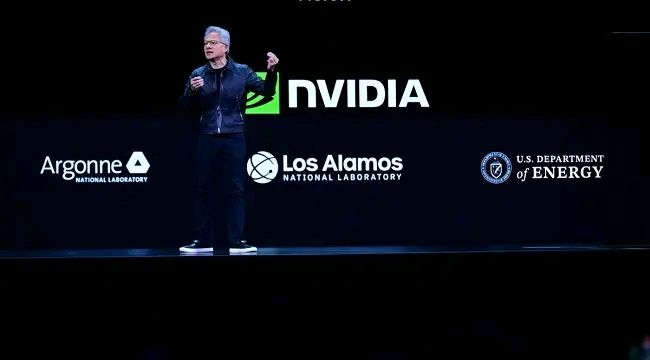
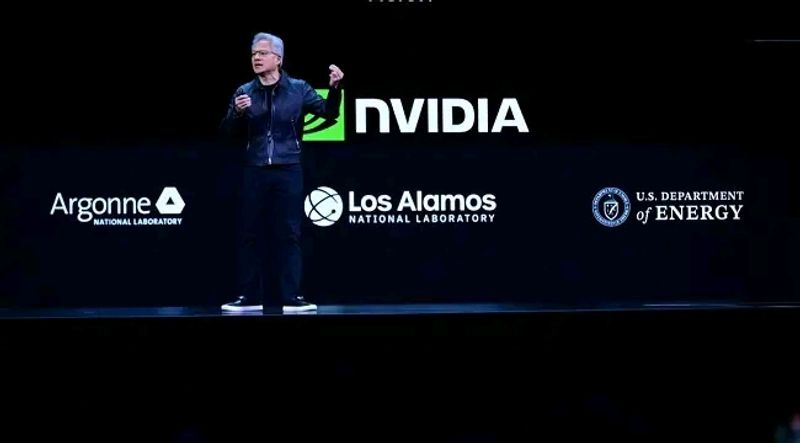
AI chip juggernaut Nvidia became the world’s first $5 trillion company on Wednesday, as investors remain confident that artificial intelligence will deliver a new wave of innovation and growth.

The California-based tech giant saw its share price rise by 4.91 percent to $210.90 at the open of trading on Wall Street, pushing Nvidia’s market capitalization past the never-before-seen threshold.
Article image

The surge in the company’s share price follows continued strong sales, a flurry of new deals — including a partnership with Europe’s Nokia announced on Tuesday — as well as expectations that the company may soon regain access to China.

Nvidia CEO Jensen Huang is expected in South Korea this week, where he will attend the sidelines of the APEC summit at which US President Donald Trump will meet his Chinese counterpart Xi Jinping, with issues related to AI development expected to be discussed.

Nvidia chips are currently not sold in China due to a combination of Chinese government bans, national security concerns, and ongoing trade tensions between the United States and China.

The Trump administration favors a more nuanced approach to selling AI chips to Beijing, but faces deep skepticism from China hawks across the US political spectrum who favor tougher bans on AI technology.

Nvidia has announced a series of partnerships in recent weeks, including an intention to invest up to $100 billion in ChatGPT-maker OpenAI over the coming years.

Article image

It also said it would invest $5 billion in struggling chip rival Intel, in response to the Trump administration’s desire to bring back more manufacturing of semiconductors to the United States.

Nvidia produces the advanced graphics processing units (GPUs) that power most generative AI systems, including those behind ChatGPT and other large language models.


Tags

Technology

Related Posts

EU Reaches Accord On New Generation Of Genetically Modified Crops

EU Reaches Accord On New Generation Of Genetically Modified Crops

The European Union has reached a provisional agreement on a new legal framework for plants developed through New Genomic Techniques (NGTs), a modern form of genetic editing that alters small parts of a plant’s DNA without introducing genes from other organisms. EU officials say the move is aimed at boosting agricultural competitiveness, improving food security, and reducing dependence on external imports. Supporters argue that NGTs can help produce climate-resistant crops with higher yields while reducing the need for fertilizers and pesticides. However, while some NGT plants will face relaxed regulations, herbicide-resistant and insecticide-producing varieties remain banned, and NGTs will not be allowed in organic farming. Environmental groups continue to raise concerns over traceability, labelling, and potential ecological risks.

Women Don Fake Mustaches In LinkedIn ‘Gender Bias’ Fight

Women Don Fake Mustaches In LinkedIn ‘Gender Bias’ Fight

A growing number of women on LinkedIn are disguising themselves as men—changing their names, pronouns, and even posting photos with fake mustaches—to test alleged gender bias on the platform. Many reported dramatic spikes in reach and engagement after switching to male identities, prompting renewed calls for greater transparency in how LinkedIn’s algorithm promotes content. While LinkedIn denies using gender as a ranking factor, users say the experiment highlights long-standing concerns about hidden gender disparities in professional visibility.

Humanoid Robots To Trial Guiding Crowds At Chinese Border Crossings

Humanoid Robots To Trial Guiding Crowds At Chinese Border Crossings

Humanoid robots may soon be guiding travellers and managing crowds at Chinese border crossings after Shenzhen-based UBTech Robotics secured a $37-million contract for a major trial project near China’s border with Vietnam. The initiative will deploy UBTech’s latest “Walker” humanoids to test real-world applications including border management support, logistics handling, and factory patrols. Deliveries of the self-charging robots are expected to begin in December, though it remains unclear whether they will operate autonomously with AI or be remotely controlled. China continues to push aggressively into humanoid robotics, with industry forecasts predicting domestic sales could hit 82 billion yuan ($11.6 billion) by 2025. Despite concerns about overcapacity in the sector, UBTech says demand for its Walker series—now generating 1.1 billion yuan in sales this year—continues to surpass expectations.

Share this article