
Back to Homepage
Opinion

I’m Not A Doctor’: Trump’s Autism Announcement Gives Covid Flashbacks

Aglow News
September 24, 2025
I’m Not A Doctor’: Trump’s Autism Announcement Gives Covid Flashbacks

I’m Not A Doctor’: Trump’s Autism Announcement Gives Covid Flashbacks

Trump himself says he has long been preoccupied with autism, and showed supreme confidence in his views on Monday. From the unproven medical claims to the self-proclaimed expertise, anyone watching Donald Trump’s autism announcements Tuesday could have been forgiven for having flashbacks.

There were strong echoes of the US president’s pandemic performance during his first term, when he once famously mused about injecting disinfectant to counter Covid.Five years later, the Republican’s claims were almost as eye-popping.And with the health of millions at stake as he urged pregnant women not to take the painkiller Tylenol — before expounding his theories on vaccines — the stakes were just as high.

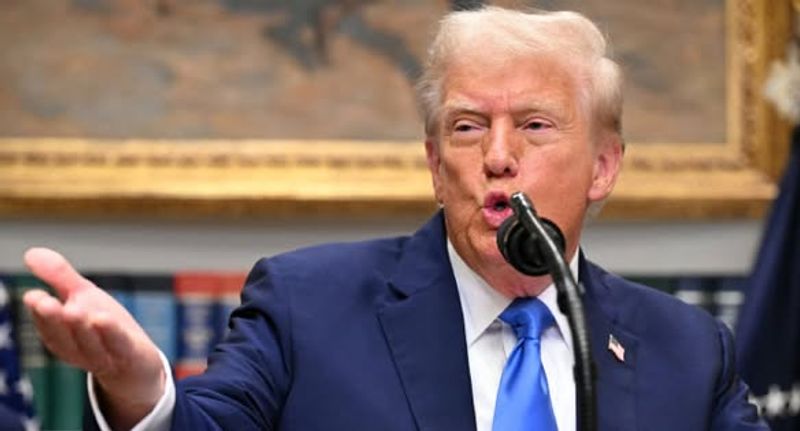
“There’s a rumor — and I don’t know if it’s so or not — that Cuba, they don’t have Tylenol because they don’t have the money for Tylenol. And they have virtually no autism,” Trump said at the White House.It was perhaps the most outrageous of the claims Trump made during a more than hour-long press conference attended by an AFP reporter — but it was far from the last.“The Amish, as an example. They have essentially no autism,” Trump said of the traditionalist people, known for their horse-drawn carts and rejection of modern technology.Turning to his vaccine-skeptic Health Secretary Robert F. Kennedy Jr, as he asked whether that was actually true, Trump added: “Bobby wants to be very careful with what he says.
Article image

I’m not so careful with what I say.”Time and again the 79-year-old Trump admitted that his personal theories were just that — theories — even as he cast himself in the role of America’s physician-in-chief.“This is based on what I feel,” said Trump as he repeated long debunked concerns over the MMR shot combining vaccines for measles, mumps and rubella.

Trump also urged further spacing for childhood vaccines that have been the cornerstone of public health programs around the world for decades — before adding: “I’m not a doctor but I’m giving my opinion.”‘Tough it out’

The billionaire former reality TV star has long made his name challenging the conventional wisdom on politics and diplomacy, and it has won him two elections.But it is on health where his views have often veered furthest from the mainstream. During the Covid pandemic Trump repeatedly resisted lockdowns and masking measures, while throwing his weight behind unproven drugs like hydroxychloroquine.

He was widely mocked when, during one of his many freewheeling White House briefings on Covid in 2020, he gave some increasingly bizarre suggestions about how to treat the disease.Trump mused about bringing “light inside the body” — and disinfectant.“I see the disinfectant, it knocks it out in a minute… is there a way we can do something like that by injection inside,” he asked a bemused expert.

During his second term, Trump’s pick of Kennedy as his health secretary has brought once fringe medical ideas into the heart of the government.Trump himself says he has long been preoccupied with autism, and showed supreme confidence in his views on Monday — even as he struggled to pronounce “acetaminophen,” or paracetamol, the active ingredient in Tylenol.“Don’t take it,” Trump said repeatedly.

He urged pregnant women in pain to avoid the drug and “tough it out,” but had few answers for what they should do for fevers that could harm them or their babies.Veering off on the subject of vaccines, Trump also had his own theories.He insisted that children should not be vaccinated against Hepatitis B until the age of 12, versus soon after birth, saying: “Hepatitis B is sexually transmitted. There’s no reason to give a baby that’s almost just born hepatitis B.”Trump added that children were being loaded up with “too much liquid” while being innoculated against potentially fatal diseases — repeating a frequent anti-vaccine talking point.

“They pump so much stuff into those beautiful little babies, it’s a disgrace,” he said. “It looks like they’re pumping into a horse.”

Tags

Opinion

Related Posts

Abia’s Q3 2025 Financial Report: Unanswered Questions, Conflicting Figures and Rising Transparency Concerns By Obinna Oriaku

Abia’s Q3 2025 Financial Report: Unanswered Questions, Conflicting Figures and Rising Transparency Concerns By Obinna Oriaku

The Abia Q3 2025 Financial Report has raised more questions than answers, exposing inconsistencies that deepen public mistrust in the state’s financial disclosures. Despite record-high FAAC disbursements nationwide and an increase in internally generated revenue, the state’s reported figures contradict earlier claims and fail to reflect development on the ground. Critical concerns include the exclusion of local government allocations from SEFTAS reports—funds controlled by the state but never publicly accounted for—alongside suspicious shifts in expenditure classifications. Previously controversial items such as the nearly ₦1 billion Security Vote and the ₦300 million Government House feeding bill have been obscured under vague headings like “Research and Development,” which has consumed over ₦34 billion since 2023 with no clear outcomes. Large sectoral allocations—including ₦14.4 billion for Land and Housing, ₦9.1 billion for Transport, and ₦13.2 billion for Education—remain unexplained, with no corresponding projects visible across the state. Meanwhile, Agriculture continues to receive negligible funding despite rising food inflation, and local government pension figures are being reported in ways that distort basic accounting principles. Taken together, these discrepancies paint a troubling picture of financial opacity. Abians are simply asking for transparency and honest accounting—nothing more. Until the government reconciles these conflicting figures and provides verifiable explanations, public confidence in its financial reporting will remain in serious doubt.

Africa’s AI moment: From consumption to digital sovereignty

Africa’s AI moment: From consumption to digital sovereignty

Africa stands at a pivotal moment in the global artificial intelligence revolution — a moment that will determine whether the continent remains a consumer of technology or emerges as a producer and rule-maker in the digital age. At the International Conference on Theory and Practice of Electronic Governance in Abuja, scholars from across the Global South warned that Africa risks repeating its historical role as a supplier of raw materials — this time in the form of data. Despite powering much of the world’s AI systems, the continent captures less than 2% of global AI investment. Through debates on data, economy, and politics, participants argued that digital sovereignty — control over data, infrastructure, and governance — is essential to breaking cycles of dependency. They called for strategic investment in digital infrastructure, skills, and policy, as well as equitable partnerships that promote technology transfer and local innovation. The emerging consensus was clear: AI is not merely a technical field but an arena of economic power and political agency. Africa must engage as an equal rule-maker, not a passive beneficiary. Like the Dangote refinery’s symbolism of industrial self-determination, building AI sovereignty will require vision, courage, and long-term investment. If pursued with intent, Africa can move from being the world’s digital quarry to a defining voice in shaping the global AI order.

Otti’s Rhetoric vs. Reality — Preaching Democracy While Practicing Selection.

Otti’s Rhetoric vs. Reality — Preaching Democracy While Practicing Selection.

Governor Alex Otti’s recent warning against election rigging — “Write your will before you write election results” — has made waves across Abia State. Yet, for many, his fiery rhetoric rings hollow. While he champions democracy publicly, Otti’s administration has been accused of bypassing internal party processes and handpicking local government officials through a splinter party seen as his personal vehicle. Critics argue that this selective practice of “elections” undermines the very democratic principles he claims to defend. As tensions rise ahead of the 2027 governorship race, Abians are left wondering: can Otti’s call for electoral integrity be trusted when his own record suggests otherwise?

Share this article