
Back to Homepage
Opinion

Otti’s Rhetoric vs. Reality — Preaching Democracy While Practicing Selection.

Aglow News
October 17, 2025
Otti’s Rhetoric vs. Reality — Preaching Democracy While Practicing Selection.

Otti’s Rhetoric vs. Reality — Preaching Democracy While Practicing Selection.

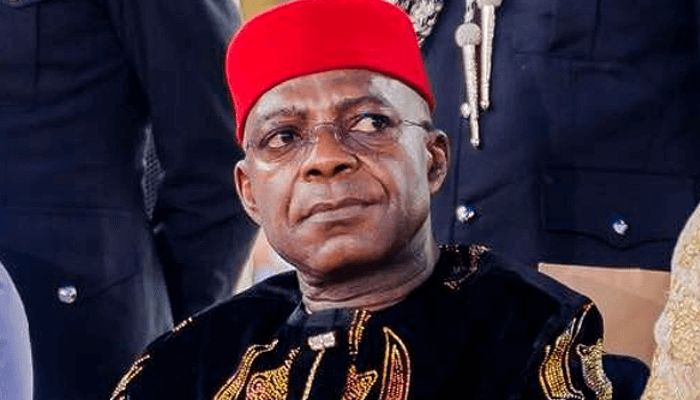
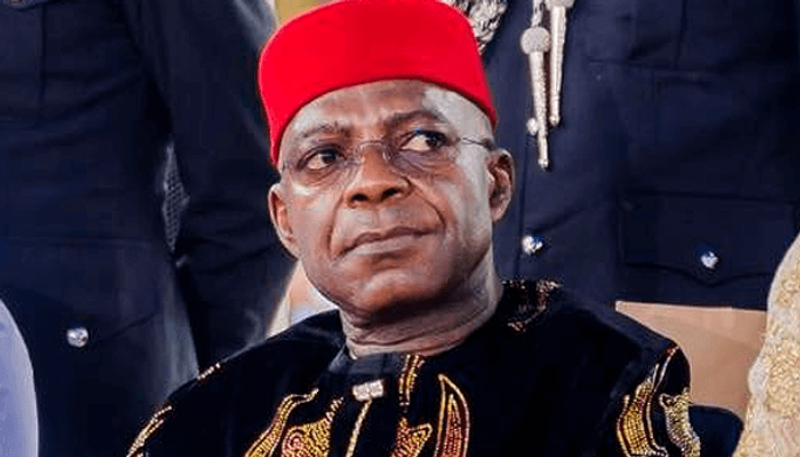
Governor Alex Otti of Abia State made headlines recently with his bold warning to politicians allegedly plotting to rig the 2027 elections. His now-viral phrase — “Write your will before you write election results” — was a dramatic caution to potential manipulators of the democratic process.

But for many Abians and critics, this fiery rhetoric rings hollow.

While Otti projects himself as a defender of free and fair elections, many observers have not forgotten the recent local government elections in Abia — or, more precisely, the lack of any credible democratic process.
Article image

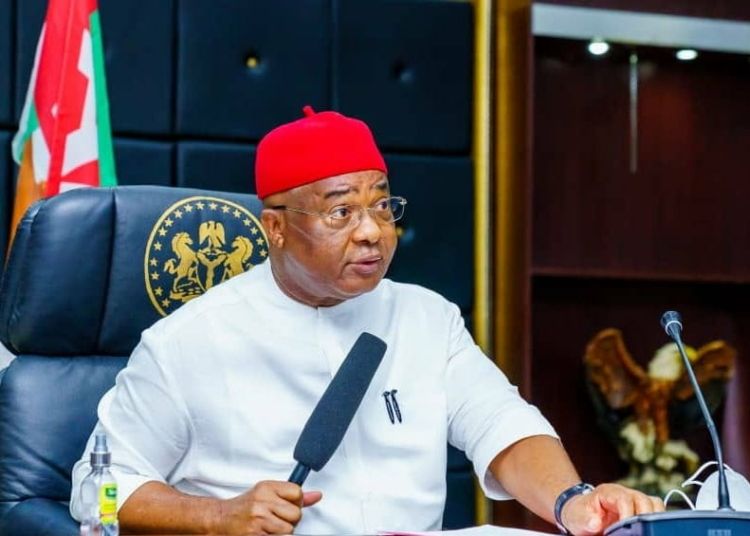
Otti’s administration handpicked local government chairmen and councillors, bypassing internal democratic mechanisms within the Labour Party and instead allegedly filling key grassroots positions with loyalists under the newly formed Zenith Labour Party (ZLP) — a splinter platform that is seen by critics as his personal political vehicle.

For those who voted Otti into office under the Labour Party (LP) banner, this move was seen as a betrayal. Many LP stakeholders were sidelined, and the LG election process was widely perceived as an imposition rather than an election, undermining the very principles of representative democracy Otti now claims to defend.

Otti's critics argue that you can’t warn others about rigging when your own democratic credentials are under question. If he handpicked local government officials, critics ask, how different is that from rigging — albeit in a more subtle, institutional way?

Is this not an example of selective outrage? Of calling out "election manipulation" only when it doesn’t benefit you?

Article image

Some interpret Otti’s fiery warnings not as moral posturing but as pre-emptive fear. With growing tensions between him and powerful national figures like Deputy Speaker Benjamin Kalu, the battle for Abia’s 2027 governorship may be fierce.

Having marginalized LP insiders, shifted political gears into ZLP, and alienated some grassroots loyalists, Otti may fear that 2027 won’t be as smooth as 2023. His warning, some say, may reflect anxiety over karma — the same “selection tactics” he used at the LG level could come back to haunt him in the upcoming general elections.

Governor Otti’s message about upholding electoral integrity would carry more weight if he practiced it across all levels of governance — not just when it suits his position.

Article image

Abians are watching. And 2027, like every election, won’t be decided by words alone — but by trust, performance, and the consistency between what leaders say and what they actually do.

Tags

Opinion

Related Posts

Abia’s Q3 2025 Financial Report: Unanswered Questions, Conflicting Figures and Rising Transparency Concerns By Obinna Oriaku

Abia’s Q3 2025 Financial Report: Unanswered Questions, Conflicting Figures and Rising Transparency Concerns By Obinna Oriaku

The Abia Q3 2025 Financial Report has raised more questions than answers, exposing inconsistencies that deepen public mistrust in the state’s financial disclosures. Despite record-high FAAC disbursements nationwide and an increase in internally generated revenue, the state’s reported figures contradict earlier claims and fail to reflect development on the ground. Critical concerns include the exclusion of local government allocations from SEFTAS reports—funds controlled by the state but never publicly accounted for—alongside suspicious shifts in expenditure classifications. Previously controversial items such as the nearly ₦1 billion Security Vote and the ₦300 million Government House feeding bill have been obscured under vague headings like “Research and Development,” which has consumed over ₦34 billion since 2023 with no clear outcomes. Large sectoral allocations—including ₦14.4 billion for Land and Housing, ₦9.1 billion for Transport, and ₦13.2 billion for Education—remain unexplained, with no corresponding projects visible across the state. Meanwhile, Agriculture continues to receive negligible funding despite rising food inflation, and local government pension figures are being reported in ways that distort basic accounting principles. Taken together, these discrepancies paint a troubling picture of financial opacity. Abians are simply asking for transparency and honest accounting—nothing more. Until the government reconciles these conflicting figures and provides verifiable explanations, public confidence in its financial reporting will remain in serious doubt.

Africa’s AI moment: From consumption to digital sovereignty

Africa’s AI moment: From consumption to digital sovereignty

Africa stands at a pivotal moment in the global artificial intelligence revolution — a moment that will determine whether the continent remains a consumer of technology or emerges as a producer and rule-maker in the digital age. At the International Conference on Theory and Practice of Electronic Governance in Abuja, scholars from across the Global South warned that Africa risks repeating its historical role as a supplier of raw materials — this time in the form of data. Despite powering much of the world’s AI systems, the continent captures less than 2% of global AI investment. Through debates on data, economy, and politics, participants argued that digital sovereignty — control over data, infrastructure, and governance — is essential to breaking cycles of dependency. They called for strategic investment in digital infrastructure, skills, and policy, as well as equitable partnerships that promote technology transfer and local innovation. The emerging consensus was clear: AI is not merely a technical field but an arena of economic power and political agency. Africa must engage as an equal rule-maker, not a passive beneficiary. Like the Dangote refinery’s symbolism of industrial self-determination, building AI sovereignty will require vision, courage, and long-term investment. If pursued with intent, Africa can move from being the world’s digital quarry to a defining voice in shaping the global AI order.

Production sharing contract and Nigeria’s pursuit of increased crude oil production

Production sharing contract and Nigeria’s pursuit of increased crude oil production

Nigeria’s renewed drive to boost crude oil production has gained momentum through major reforms and new investments in the upstream sector. Over a year after the Nigerian Upstream Petroleum Regulatory Commission (NUPRC) launched its ambitious programme to raise oil output by one million barrels per day, production has risen to about 1.78 million barrels daily, with active rigs increasing from eight in 2021 to 46 by mid-2025. Central to this progress is the recent signing of a landmark Production Sharing Contract (PSC) between NNPC Limited, TotalEnergies EP Nigeria Limited, and South Atlantic Petroleum (SAPETRO) for Petroleum Prospecting Licences (PPLs) 2000 and 2001. The agreement, executed under the Petroleum Industry Act (PIA), introduces innovative terms covering both oil and gas, setting a new benchmark for transparency, fiscal balance, and environmental responsibility. The PSC, featuring a $10 million signature bonus and milestone-linked production bonuses, is expected to unlock Nigeria’s deep-water potential, expand reserves, and enhance energy security. NUPRC’s Chief Executive, Engr. Gbenga Komolafe, described the contract as a blueprint for future sector growth, aligning with Nigeria’s goal of producing 2.6 million barrels per day by 2026. Recent asset acquisitions by Renaissance Africa Energy and Seplat Energy, following divestments by Shell and Mobil, have further strengthened local participation and boosted national output. With rising investor confidence, deep-water exploration, and indigenous expansion, Nigeria appears on course to achieve its production targets and consolidate its position as a leading energy producer in Africa.

Share this article